


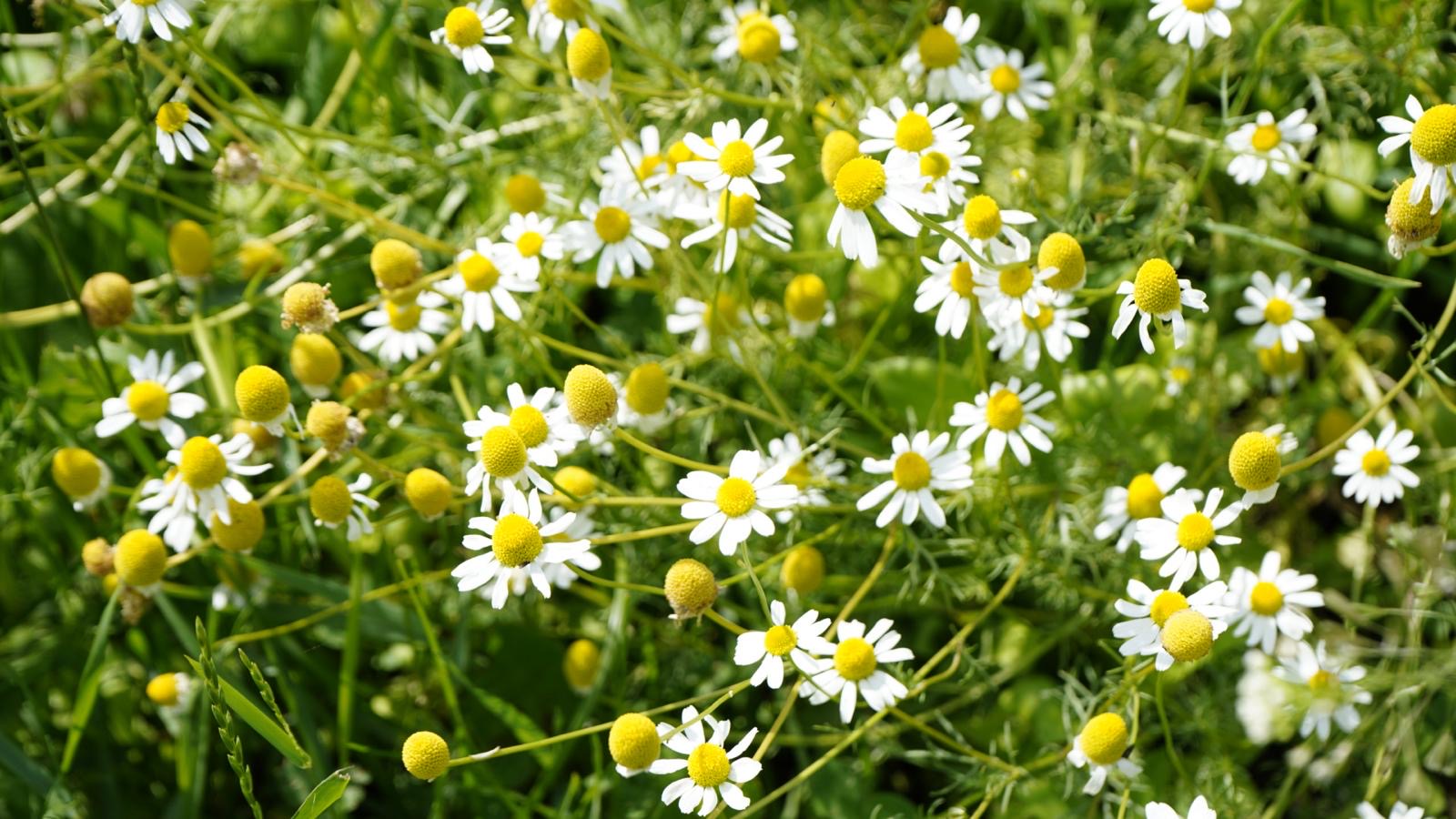
Chamomile is one of the world’s most well-known medicinal herbs — modest in appearance, yet remarkably versatile in its effects. It is valued for its calming, anti-inflammatory, and digestive-supporting properties and is widely used in teas, oils, tinctures, and skincare products. It is suitable for both children and adults, and its benefits are supported by scientific research. In traditional medicine, it has been a trusted companion for centuries, helping to ease insomnia, digestive discomfort, anxiety, and skin irritation.
Quick Facts About Chamomile
Latin names: Matricaria chamomilla, Chamaemelum nobile
Traditional names: white-yellow blossom tea, calming herb, children’s tea
Origin: Europe and the Middle East (now cultivated worldwide)
Botanical family: Asteraceae (daisy family)
Known effects: calming, anti-inflammatory, antispasmodic
The herb is an annual plant that grows 20–40 cm tall. It is easily recognised by its small white petals and yellow disc florets, and its gently sweet aroma is familiar to many from childhood.
A Long History of Healing
Chamomile was already used as a medicinal plant in Ancient Egypt, where it was considered a gift from the sun god Ra. During the Middle Ages, it was found in nearly every monastery’s herb garden. n Estonia as well, chamomile has been treasured in folk medicine for centuries. The Herbal Tea was given to children for stomach aches, used as eye compresses, and applied as a hair rinse to brighten light hair. In local tradition, it is even called a soother of the soul. An old saying goes: “Chamomile calms the spirit and eases the body.”
Main Benefits
Calms the Nervous System and Reduces Anxiety
Apigenin, a bioactive compound in chamomile, binds to GABA receptors in the brain, helping the body relax and release tension.
Supports Better Sleep
Drinking chamomile tea before bedtime may shorten the time it takes to fall asleep and improve sleep quality. Studies show that new mothers who regularly drank tea slept better and experienced fewer depression-like symptoms.
Supports Digestion
It helps relieve bloating, nausea, and digestive cramps by relaxing the smooth muscles of the gastrointestinal tract.
Anti-inflammatory and antibacterial properties
The essential oils and flavonoids help soothe skin inflammations and irritations while inhibiting bacterial growth. Suitable for use in the care of boils, minor ulcers, and superficial wounds, as well as for mouth and throat inflammations. As a compress, chamomile is also effective in relieving eye infections and irritation or inflammation of the mucous membranes. Soothes and Restores Skin. It is well known for easing eczema, psoriasis, burns, and diaper rash. It reduces redness and itching while supporting skin healing.
How to Use Chamomile
– Tea – classic tea made from dried flowers
– Tincture – alcohol extract for internal use
– Oil – for aromatherapy or blended with a carrier oil for skin
– Ointments & creams – for rashes, burns, and irritation
– Powder or capsules – concentrated dietary supplements
What Does Science Say?
Regular chamomile use has been associated with improved sleep and relaxation, reduced moderate anxiety, and lower blood sugar levels in people with diabetes, decreased inflammation and oxidative stress and possible supportive effects on heart health.
Apigenin has also attracted attention for its potential anti-cancer properties, though most evidence comes from laboratory and extract studies rather than ordinary tea. Chamomile may also help with PMS, menstrual discomfort, and mild skin conditions.
The European Medicines Agency recognizes chamomile preparations as suitable, among other uses, for digestive complaints, relief of cold symptoms, mouth and throat inflammation, treatment of minor wounds and skin inflammation.
When to Be Cautious?
Although chamomile is generally safe, extra care is advised for:
- people allergic to plants in the daisy family (such as ragweed or calendula)
- those taking blood thinners (e.g., warfarin)
If symptoms persist longer than a week or if you are taking medication, consult a healthcare professional.
In Summary
Chamomile is a beautiful example of how nature offers simple yet powerful support. Whether it’s a warm cup of tea before sleep, a soothing eye compress, or gentle care for sensitive skin — chamomile nurtures both body and mind. It is not a miracle cure nor a replacement for medical treatment, but when used moderately and consistently, it can become a valuable part of everyday self-care.
Sometimes, all it takes is one cup of tea to make the world feel a little softer!
References:
https://maarohud.weebly.com/kummel.html
https://www.ohtuleht.ee/tervis/665458/teekummel-aitab-rahuneda-ja-peletab-poletikke
https://en.wikipedia.org/wiki/Chamomile
https://www.medicalnewstoday.com/articles/320031#summary
https://www.ema.europa.eu/en/medicines/herbal/matricariae-flos