


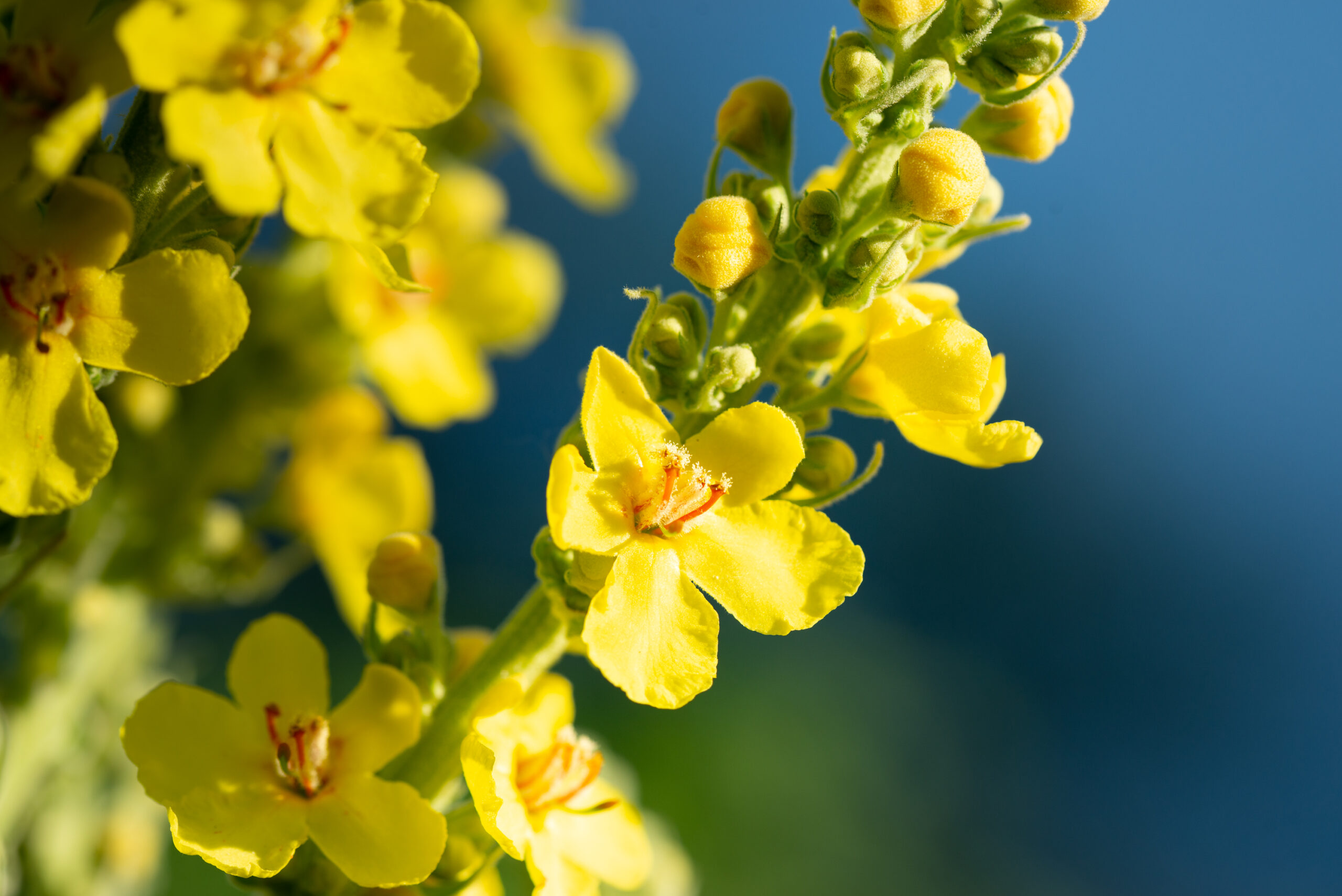
Great Mullein (Verbascum thapsus) is a medicinal plant with a history that stretches back thousands of years. Across continents and cultures, it has been valued for its gentle yet versatile nature and its wide range of traditional uses. Today, Great Mullein continues to be appreciated as part of a natural wellness routine, offering support for respiratory health, digestion, immune function, and overall physical comfort.
With over 200 species identified worldwide, the most commonly used variety is Verbascum thapsus, also known as common mullein. Native to Europe, Africa, and Asia—and now widely found in North America—this plant has become a staple in herbal traditions globally. The leaves, typically harvested from the lower part of the plant, and the flowers are used either fresh or dried to prepare teas, oils, infusions, and other herbal remedies.
A Plant Rooted in Tradition
Great Mullein has long been associated with traditional medicine systems, including European and Spanish folk practices. Historically, it has been used to support multiple body systems: respiratory, digestive, circulatory, musculoskeletal, sensory, and even in the context of infectious diseases.
In Spanish traditional medicine, Verbascum species have been applied in treating conditions related to the musculature, skeleton, circulation, digestion, and respiratory tract. They have also been used in cases of infectious and parasitic diseases, as well as various skin and sensory conditions. Many of these uses are linked to the plant’s anti-inflammatory potential, which is supported by its rich phytochemical composition.
Excellent bioactive compounds in Great Mullein and their potential
Great Mullein contains a diverse range of naturally occurring compounds that help explain its traditional applications. These include:
– Saponins, associated with anti-inflammatory, pain-relieving, and potential antitumor properties
– Flavonoids, known for their antioxidant and anti-inflammatory effects
– Phenylpropanoid glycosides, which may provide antioxidant, antiviral, and anti-inflammatory support
– Iridoids, also linked to anti-inflammatory activity
In addition, compounds such as quercetin, luteolin, apigenin, kaempferol, rutin, and verbascoside have been identified in mullein. These phytochemicals are widely studied for their role in reducing inflammation and protecting cells from oxidative stress.
Respiratory Support and Throat Comfort
One of the most well-known and widely documented uses of Great Mullein is its role in supporting the respiratory system.
Traditionally, Great Mullein has been used for:
– Coughs and colds
– Bronchitis and asthma
– Tonsillitis and hoarseness
– Shortness of breath and airway irritation
– Even more severe symptoms such as hemoptysis (coughing up blood)
Its action is often described as soothing and softening, particularly for the mouth, throat, pharynx, and vocal cords. It can help relieve throat tickling and irritation, making it useful during temporary hoarseness or vocal strain.
Great Mullein is also associated with promoting easy and natural breathing. Some sources suggest that it may have antispasmodic properties, meaning it could help relax the muscles of the respiratory tract.
Traditional preparations vary widely and include:
– Teas and infusions
– Syrups
– Macerations
– Herbal blends with plants such as mint, thyme, rosemary, mallow, hawthorn flower, coltsfoot, and pine leaves
– Additions like honey or sugar to enhance soothing effects
Modern herbal authorities, such as the European Medicines Agency (HMPC), recognize mullein flower preparations for relieving sore throat associated with dry cough and colds, based on long-standing traditional use—even though clinical evidence is still limited.
Antiviral, Antibacterial, and Anti-Inflammatory Properties
Scientific research into mullein has revealed promising antimicrobial and anti-inflammatory properties, although much of the evidence comes from laboratory and early-stage studies.
Antiviral activity
Studies suggest that mullein species may have activity against the influenza A virus and Herpes-related viruses
One study even indicated that combining mullein with the antiviral medication amantadine increased its effectiveness against influenza.
Antibacterial effects
Mullein extracts have demonstrated activity against both Gram-positive and Gram-negative bacteria, including:
– Escherichia coli
– Streptococcus pyogenes
– Bacillus cereus
Additionally, aqueous extracts of Verbascum thapsus have been shown to inhibit bacteria associated with respiratory infections.
Anti-inflammatory mechanisms
A large portion of mullein’s traditional use appears to be connected to its anti-inflammatory compounds. Flavonoids such as luteolin, quercetin, apigenin, and kaempferol are believed to play a key role in this effect. These compounds may help explain why mullein has historically been used in conditions ranging from respiratory illnesses to joint pain and skin inflammation.
Digestive Support and Internal Use
Great Mullein has also been widely used to support the digestive system.
Traditional uses include:
– Indigestion and digestive discomfort
– Abdominal pain (often linked to gut or liver inflammation)
– Diarrhea and constipation
– Gastric ulcers and inflammation
– Liver inflammation and gallstones
Different methods of application have been used depending on the condition:
– Infusions and decoctions for internal use
– Mouthwashes to address toothache and gum infections
– Enemas for constipation and pediatric gut swelling
– Poultices applied externally for abdominal discomfort
These diverse applications highlight the plant’s perceived role in promoting overall digestive balance and comfort.
Ear Health and Traditional Oil Preparations
Great Mullein flowers have a long-standing role in traditional ear care.
A study published in the International Journal of Pediatric Otorhinolaryngology found that an herbal ear drop containing mullein, garlic, and calendula was as effective as conventional ear drops in treating acute otitis media (ear infections) in children.
Traditional preparation of mullein ear oil:
– Place dried mullein flowers in a clean jar
– Cover completely with a carrier oil such as olive or almond oil
– Seal and place in a warm, sunny location for several weeks
– Shake occasionally
– Strain through cloth or fine mesh
– Optionally add garlic or calendula
– Warm gently before use and apply drops into the ear
While widely used in traditional practice, such remedies should always be used cautiously and ideally under professional guidance.
Applications Across Body Systems
Mullein’s traditional use spans an exceptionally wide range of conditions:
| Body System / Area | Traditional Use | Application / Method |
| Respiratory system | Cough, colds, asthma, bronchitis, tonsillitis, hoarseness, hemoptysis | Infusions, syrups, macerations, herbal blends |
| Breathing support, irritation relief | Tea, inhalation | |
| Ear (Sense organs) | Otitis, ear infections | Herbal oil drops |
| Eyes (Sense organs) | Conjunctivitis | Herbal preparations |
| Digestive system | Indigestion, abdominal pain, diarrhea, constipation, liver inflammation, gallstones, gastric ulcers | Infusions, decoctions, enemas, poultices |
| Toothache, gum boils | Mouthwash | |
| Circulatory system | Hemorrhoids | Sitz baths, topical applications |
| Blood pressure (traditional reference) | Herbal use | |
| Musculoskeletal system | Rheumatism, arthrosis, swelling | Topical use |
| Skin | Wounds, burns, eczema, rashes, cysts, acne, insect bites, nail infections, chilblains | Poultices, topical extracts |
| Infectious diseases | Tuberculosis, diphtheria, typhus, parasitic infections, mange | Infusions, tinctures |
| General | Anti-inflammatory support | Internal and external use |
Great Mullein Tea: Preparation and Experience
Great Mullein tea is one of the most common and accessible ways to use the plant. It has a mild, slightly aromatic flavour, often compared to a gentle green tea.
Recipe:
– 1 Melie Herbal Tea mullein tea bag
– 250 ml hot water
– Honey (optional)
– Lemon slice (optional)
Preparation:
Pour hot water over the tea and allow it to steep for 10–15 minutes. Add honey or lemon if desired. Drinking warm Great Mullein tea may also help soothe symptoms of viral infections and support hydration.
Other Traditional Methods of Use
In addition to tea, Great Mullein has been used in several other ways:
- Steam inhalation: Leaves added to hot water, with steam inhaled for 10–15 minutes
- Poultices: Crushed leaves applied to the skin for inflammation or pain
- Smoking (historical use): Used as a rapid method for respiratory distress (not recommended today, especially for those with lung conditions)
Safety and Considerations
Although mullein is generally considered safe and no major side effects have been widely reported, several precautions should be kept in mind:
- Safety has not been well established for pregnancy, breastfeeding, infants, or very young children
- The plant contains tiny hairs that may irritate the skin or throat if not properly filtered
- Always strain tea thoroughly before drinking
- There may be allergic reactions or interactions with medications
- Consult a healthcare professional before using mullein for serious, chronic, or infectious conditions
It is especially important not to self-treat serious bacterial or viral infections without medical guidance.
Scientific Perspective and Ongoing Research
Modern research provides growing support for many of mullein’s traditional uses, particularly its anti-inflammatory, antimicrobial, and antioxidant properties.
Some recent studies have also explored:
– Neuroprotective effects (e.g., in Alzheimer’s-related research in animal models)
– The plant’s ability to interact with biological targets at a molecular level (in silico studies)
Despite these promising findings, there is still a lack of large-scale human clinical trials, and further research is needed to fully understand its effectiveness and safety.
Final Thoughts
Great Mullein (Verbascum thapsus) stands out as one of the most versatile medicinal plants in traditional herbal practice. Its wide range of applications—from respiratory and digestive support to skin care and ear health—reflects a deep-rooted history of use across cultures.
While modern science is beginning to validate many of these traditional applications, mullein remains, above all, a gentle, supportive herb, best suited for those seeking a natural and balanced approach to everyday well-being.
References:
https://www.ema.europa.eu/en/medicines/herbal/verbasci-flos
https://www.healthline.com/nutrition/mullein-tea#preparation
https://thesurvivaluniversity.com/eat-the-weeds-great-mullein/