

Yarrow Flower – A Traditional Folk Medicine Plant Still Valued Today
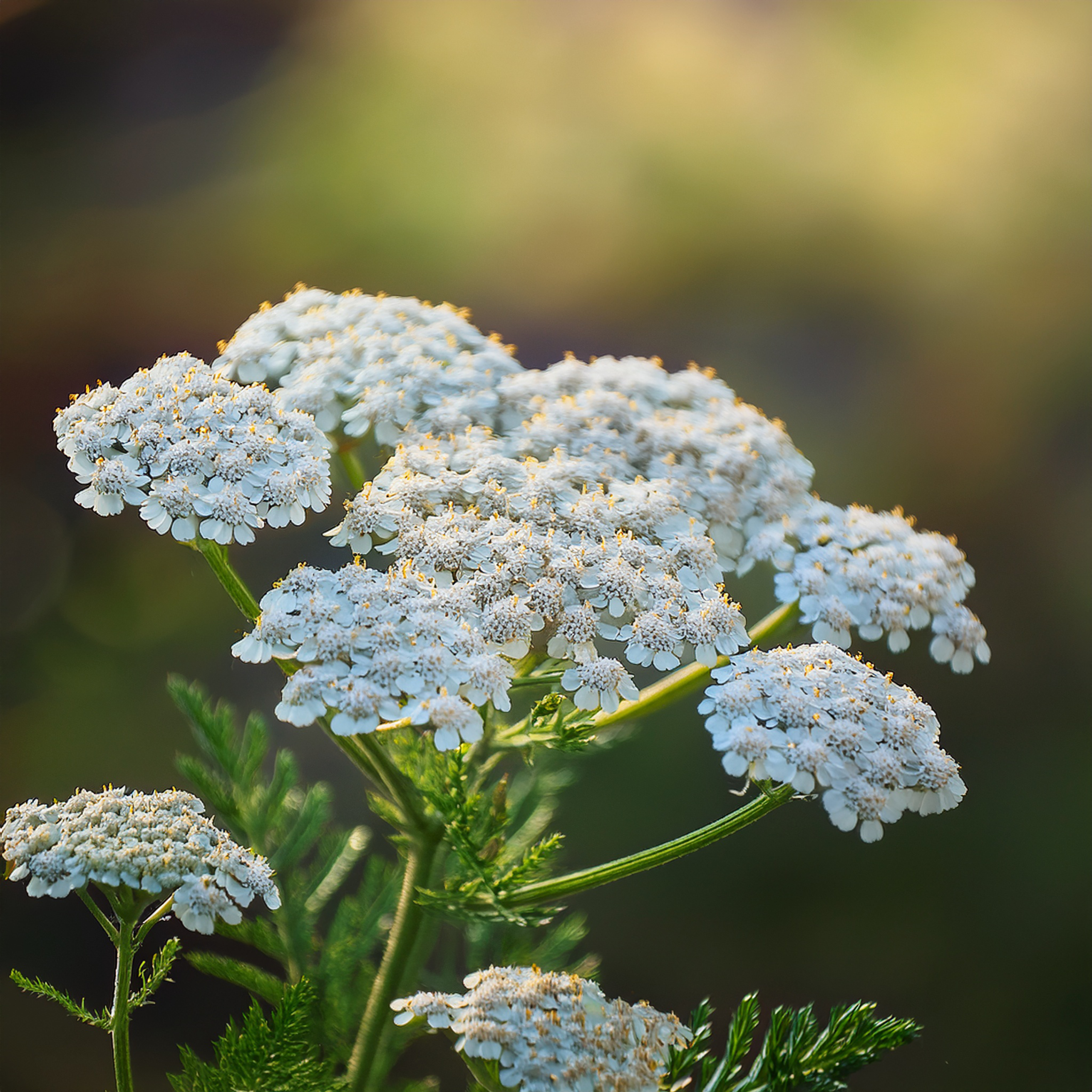
Yarrow, also known as common yarrow, is one of the best-known medicinal herbs in nature. It’s fine, feather-like leaves and small white or pale pink yarrow flowers are familiar to many people walking near meadows, roadsides, and field edges. Yarrow flower has been used for centuries both for making tea and for external treatment.
The Latin name of yarrow, Achillea millefolium, refers to the Greek hero Achilles, who, according to legend, used this plant to treat the wounds of his soldiers. This is also where yarrow’s connection with stopping bleeding and wound care originates.
Why is the yarrow flower valued?
Just as plantain is used for wounds, yarrow has also been known as a plant used for small wounds, scratches, and bleeding. As a medicinal herb, the entire aerial part of the plant is mainly used, though sometimes only the flowers are used.
Yarrow contains several bioactive compounds, including chamazulene, thujone, camphor, pinene, amino and organic acids, tannins, flavonoids, carotene, and vitamins C and K. The amount of these compounds may vary depending on the plant’s growing conditions, soil, and climate.
In folk medicine, yarrow has mainly been used for:
- caring for wounds and scratches
- supporting normal vascular function
- reducing bleeding
- supporting digestion
- relieving bloating and gas
- soothing menstrual cramps
- relieving throat irritation and cough
- caring for skin irritation, boils, and scabs
- nosebleeds and bleeding gums
- anemia and constipation
In many cultures, yarrow has also been considered a “women’s herb” because it has traditionally been used for menstrual discomfort. However, yarrow is not recommended during pregnancy.
Yarrow Flower and Digestion
Yarrow Flower is a bitter-tasting herb, and this bitterness may help support digestion. Traditionally, it has been used for loss of appetite, bloating, gas, and slow digestion.
The Herbal Medicinal Products Committee of the European Medicines Agency, HMPC, has concluded that based on long-standing use, yarrow preparations may be used for temporary loss of appetite, mild digestive complaints, bloating, and flatulence. They may also be used for mild menstrual cramps and small superficial wounds.
In folk medicine, yarrow tea has often been consumed before meals to stimulate appetite and digestive juices. Sometimes yarrow is combined with other bitter herbs such as wormwood, centaury, or dandelion.
Support for the Throat and Respiratory Tract
Yarrow flower tea has traditionally been used for coughs, sore throats, and hoarseness. It has a soothing effect on the mouth, throat, and vocal cords and can help relieve throat irritation.
Help for Wounds and Skin
One of the best-known uses of yarrow is related to wound care. The leaves or infusion of the plant have been used for small superficial wounds, scratches, abrasions, and insect bites.
Modern research also suggests that compounds found in yarrow may have anti-inflammatory and antioxidant properties that may support wound healing. Some laboratory studies have also shown antibacterial effects.
In folk medicine, yarrow has also been used for:
- skin irritation
- boils and scabs
- relieving hives
- nosebleeds and bleeding gums
- soothing external inflammation
Menstrual Pain and Women’s Health
Yarrow flowers have been used for centuries to relieve menstrual discomfort. It is especially well known for its effects on mild abdominal cramps and heavy menstrual bleeding.
Traditionally, yarrow tea is recommended cooled when used for heavier menstruation. The European Medicines Agency also recognizes the traditional use of yarrow for relieving minor menstrual spasms.
However, it is important to remember that pregnant women should not use yarrow, as it may stimulate the uterus.
What Else Is Science Studying?
In recent years, the possible effects of yarrow have been studied more broadly. Preliminary studies suggest that the flavonoids and alkaloids found in yarrow may support:
- reducing inflammation
- protecting the digestive tract
- nervous system health
- balanced mood
- insulin sensitivity
- liver and skin well-being
However, it is important to emphasize that most of these studies are based on animal experiments or laboratory studies. Firm conclusions about human health cannot yet be made, and yarrow should not be considered a treatment for serious diseases.
How to Use Yarrow Flower Tea?
The most common way to use yarrow flowers is as tea. Usually, dried herb or flowers are used.
To prepare tea, use one Melie Herbal Tea Yarrow tea bag per cup of hot water and allow it to steep for 5–10 minutes.
For external use, cooled infusion can be applied as a compress for small wounds, skin irritation, or gum problems.
When Should You Be Careful?
Although yarrow is a traditional medicinal herb, it is not suitable for everyone.
You should be cautious when using yarrow if:
- you are pregnant
- you are allergic to plants in the daisy family
- you use blood thinners
- symptoms persist for a long time or worsen
- you have larger wounds or heavy bleeding
According to the European Medicines Agency, yarrow preparations are suitable for adults and adolescents over 12 years of age. If digestive problems last longer than two weeks, or wounds and menstrual cramps last longer than one week, a doctor or healthcare professional should be consulted.
Summary
Yarrow is one of our most traditional medicinal herbs, and its uses range from wound care to supporting digestion and relieving menstrual discomfort. Although folk medicine has valued yarrow for centuries, modern European herbal assessments also support its use for mild digestive complaints, superficial wounds, and menstrual cramps.
As with all medicinal herbs, it is important to use yarrow in moderation and consult a healthcare professional when necessary.
References:
https://www.ema.europa.eu/en/medicines/herbal/millefolii-herba
https://www.healthline.com/nutrition/yarrow-tea
https://usinaednik.ee/traditsioonilised-ravimtaimed-loodusest/raudrohi/